

Good Peer Supervision Protects the Peer Role
We spend a great deal of time discussing whether a peer professional has received the right training, understands ethics, maintains boundaries, and knows their role.
Those things matter.
But I think we also need to ask:
Does the person supervising the peer understand the peer role well enough to help protect it?
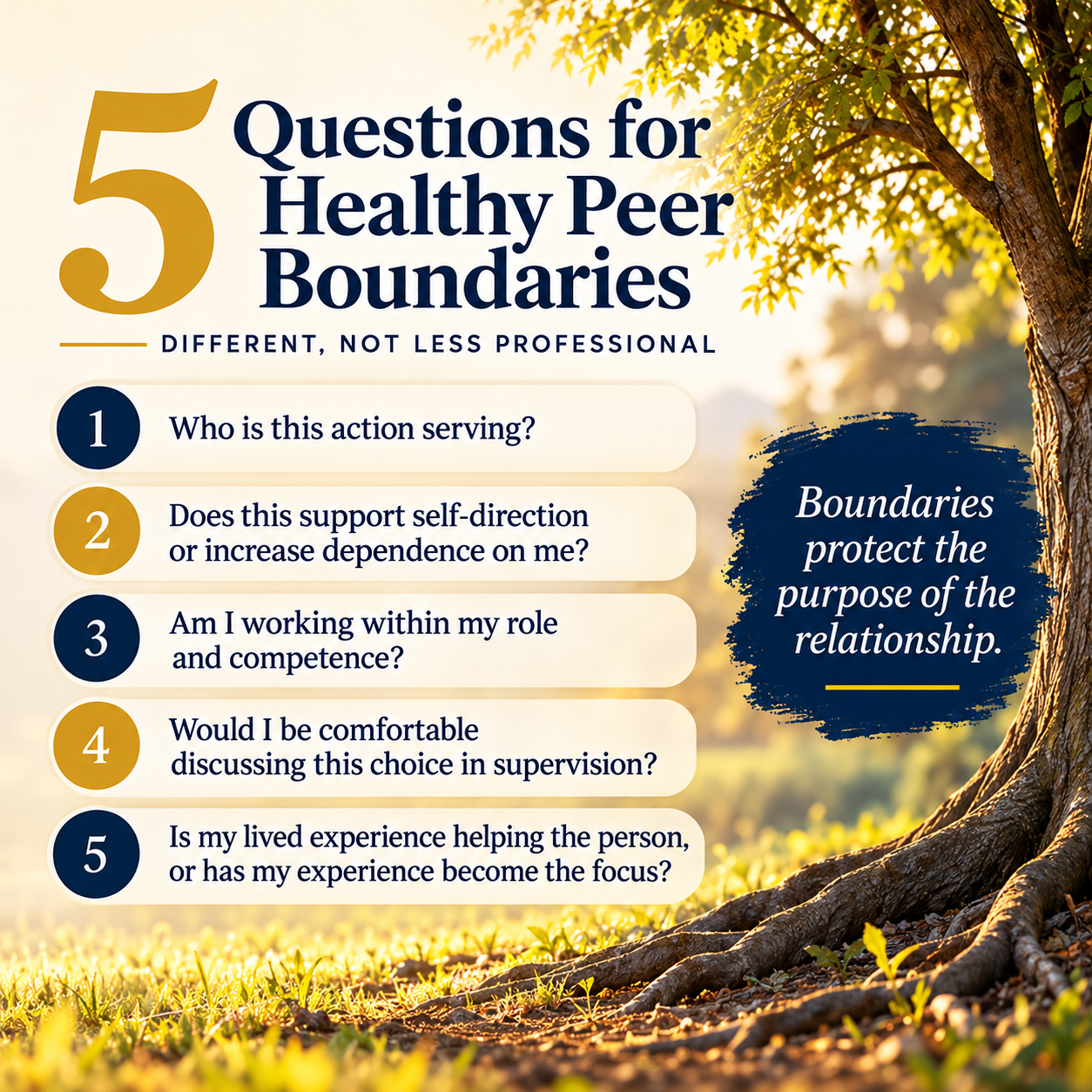
Peer Boundaries Are Different, Not Less Professional
One of the conversations I think we need to continue having in peer services is around boundaries.
Sometimes professional boundaries are discussed as though there is one model that should apply equally to every helping profession.
I am not sure that is always helpful.

From Knowing to Becoming: How Practice, Reflection, and Application Turn Knowledge into Wisdom
We can attend a training and understand every concept.
We can read a book and agree with every chapter.
We can learn a communication skill, coping strategy, ethical principle, or recovery tool and explain it beautifully to someone else.
Then a real situation happens.
From Information to Wisdom: Why Reflection Is Part of Learning
Completing a training can give us information.
Understanding the material can give us knowledge.
But neither automatically means we will use it differently on Monday morning.
That is where practice and reflection become important.

Professionalizing the Peer Role Without Losing What Makes It Peer
I believe strongly in professional development for peers. Good training matters. Ethics matter. Supervision matters. Boundaries, continuing education, role clarity, and opportunities for advancement matter.